- Audio
-
Gutti
- Information
-
Gutti
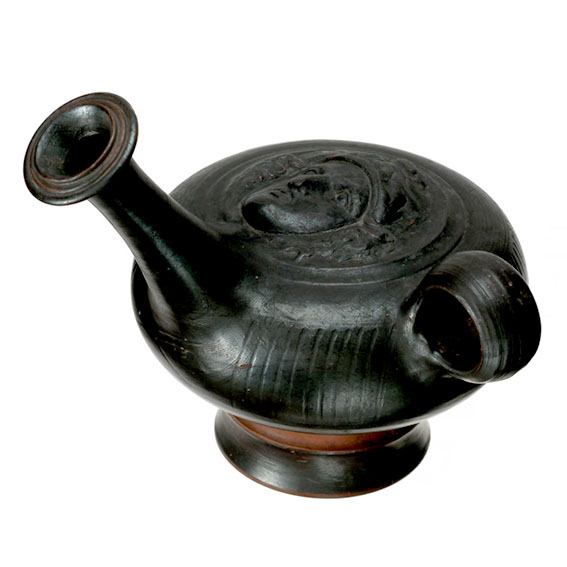
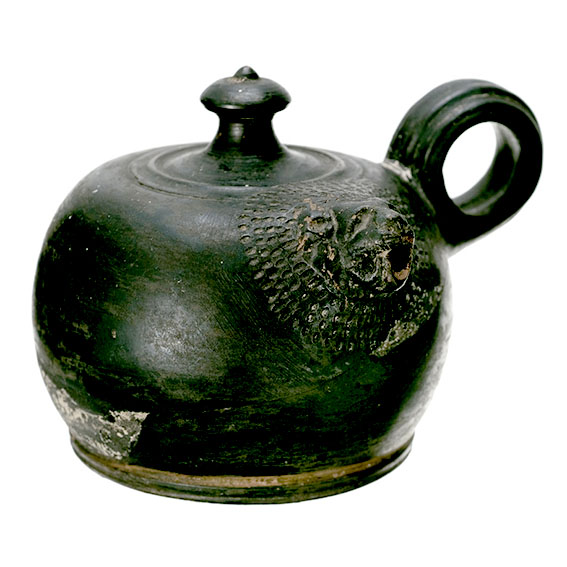
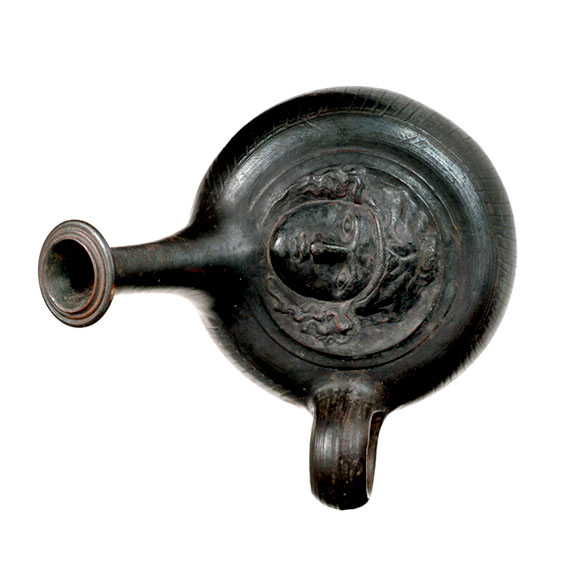
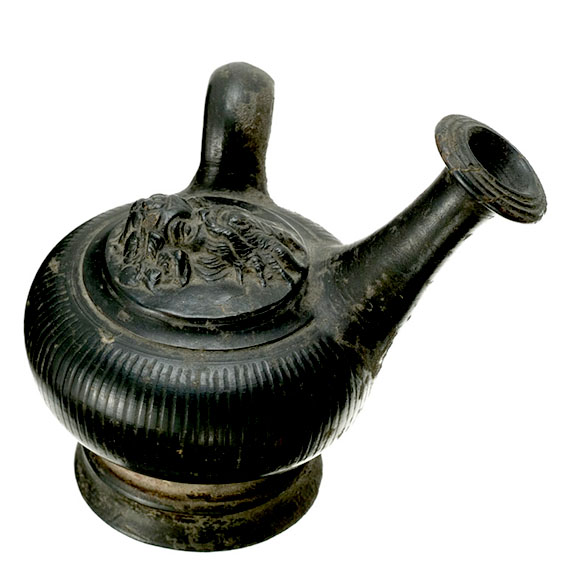
Except for Gnathia pottery, in the 4th century B.C. in Southern Italy there appeared the so called pottery with relief decorations that developed under the influence of Greek and eastern Hellenistic centres. This type of pottery by its shape (relief, fluting and black varnish) imitates metal-ware and thus symbolizes the severance from the century-long tradition of painting vessels. Due to great demand, it is assumed that numerous workshops were active in Apulia and Campania where such relief pottery was manufactured.
In the Museum collection, in the group of black relief pottery we find gutti represented that most probably come from the Apulian and Campanian workshops from the end of the 4th to the beginning of the 2nd century B.C. These vessels are short round flasks with a narrow neck, which at the same time represents a specific shape from Southern Italy.