- Audio
-
Sphinx's head
- Information
-
Sphinx's head
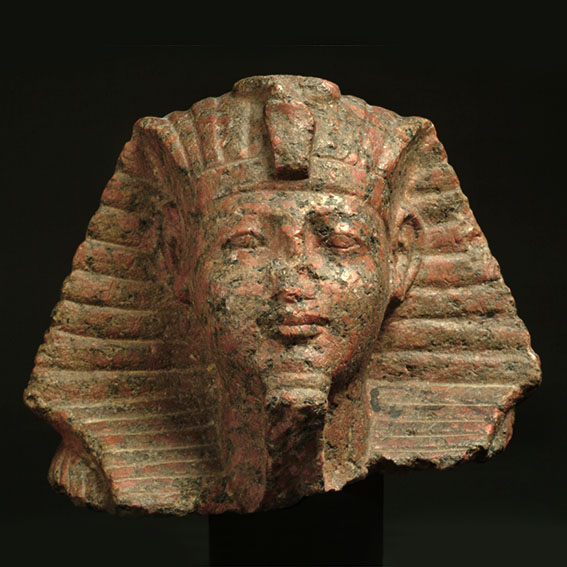
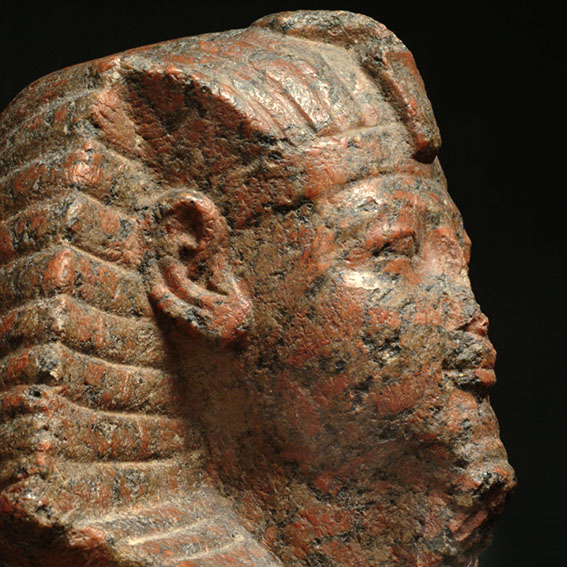
In the glass-case with a raised pedestal the head of the mythical being Sphinx has been exhibited. This established name of the deity with the body of a lion and human head comes from the Greek language; the Egyptian sphinx differs somewhat from the Greek one – first of all because it has no wings. This deity was called Horemakhet in Egypt which means "Horus on the horizon".
For the Egyptians Horus was one of the forms of the Sun that is realized through the power of the pharaoh as the divine person. On the head of the sphinx there is the customary Pharaonic headgear or klaft with horizontal lines. On the forehead there is the representation of a cobra's head (ureus) that symbolizes solar power. The klaft descends behind the ears covering the shoulders as well. On the right side of the monument a part of the shoulder is preserved.
Besides other Pharaonic signs the typical beard is also obvious. The monument is made of pink granite. The head probably represents Pharaoh Amenhotep II (15th to 14th century B.C.), and the possible place of the origin is Luxor. The biggest sphinx in the world, 60 metres in length, is situated in front of Chephren's (Khafre) pyramid in Giza (Gizeh).